Will 2026 be a good year? Here’s the honest answer: 71% of people globally believe 2026 will be better than 2025. That’s significant optimism—especially compared to 2020 when 90% said their country was in crisis. But here’s the more important truth: whether 2026 is actually good depends far less on external circumstances than you think. It depends on what you build.
The Outlook: Why 2026 Has Genuine Promise
According to a 30-country Ipsos survey conducted in late 2025, 71% of people are optimistic 2026 will be better than 2025, while 29% remain skeptical. This isn’t blind hope. The optimism is grounded in real factors: expected economic growth in key sectors, job market expansion, and a global shift toward authentic connection and personal growth.
The economic picture is mixed but hopeful. While 49% predict the global economy will improve and 51% think it might decline, within that uncertainty are genuine opportunities. Job markets are expanding in green infrastructure, quick commerce, technology, healthcare, and renewable energy sectors. Tax refunds are expected early in the year. Wage growth continues for many. And in emerging markets, there’s significant potential for wealth creation.
Beyond economics, people are signaling behavioral intentions that suggest better outcomes. 82% plan to spend more time with family and friends in 2026—a massive commitment to relationship investment. 75% say they’ll exercise more. 60% will focus more on their appearance and self-care. These aren’t accidental wishes; they’re deliberate choices to build better lives.
The Science: What Actually Makes a Year “Good”
Here’s what might surprise you. An 85-year study from Harvard University—the longest-running happiness research ever conducted—reveals that what actually determines whether your year is good has almost nothing to do with external success.
The research tracked thousands of people across their entire lifespans, measuring not just happiness but health, longevity, career achievement, and life satisfaction. The findings are clear: the single greatest predictor of a good life is the quality of your relationships.
Not your career achievements. Not your wealth. Not your physical attractiveness or even your health, though that matters. The quality of your relationships determines whether you’re happy, healthy, and living longer. People with strong social connections live longer, experience fewer health problems, maintain sharper minds, and report greater life satisfaction than isolated individuals. In fact, loneliness is as damaging to your health as smoking or alcoholism.
This relationship benefit works through multiple mechanisms. Strong relationships create a sense of safety and security. They provide learning opportunities through shared experiences. They offer emotional closeness and the feeling of being truly known. They affirm your identity and worth. They provide practical help when life gets difficult. And critically, they create space for fun and relaxation.
Beyond relationships, two other factors determine whether a year feels good:
Your Resilience and Outlook: Every single person will experience disappointments, failures, and challenges in 2026. The question isn’t whether you’ll face difficulty—you will. The question is how you bounce back. Research shows that happiness doesn’t come to people who avoid problems; it comes to people who bounce back from them. Your resilience—your ability to recover from setbacks—determines your happiness more than the setbacks themselves.
Your Personality and Internal Mindset: Your general temperament, your outlook on life, and your ability to adapt to circumstances influence your happiness more than the circumstances themselves. People vary in their “set point” for happiness—some are naturally more optimistic, others more cautious. The good news: this isn’t fixed. Outlook and resilience can be cultivated through practice.
This research reveals a profound truth: a good year isn’t created by what happens to you; it’s created by what you do about what happens. Two people can face identical external circumstances—an economic downturn, a job loss, even serious illness—and one year is “good” while the other is devastating, depending on relationships, resilience, and perspective.
Four Foundational Moves That Create a Good 2026
Given what the science shows, here’s exactly what to focus on:
Move 1: Audit and Invest in Your Relationships
Before you set any goals for 2026, ask yourself: Do I have strong support in seven critical areas?
Research on relationship health identifies seven pillars that create genuine support:
- Safety & Security: People who have your back, who you can trust without fear
- Learning & Growth: People who challenge you to improve and support your development
- Emotional Closeness: People you can be vulnerable with, who truly see you
- Identity Affirmation: People who remind you of who you are and your worth
- Romantic Intimacy (if applicable): Meaningful partnership and physical closeness
- Practical Help: People who show up when you need them—with time, resources, support
- Fun & Relaxation: People who bring joy, laughter, and lightness
Look at your life. Who fulfills each role? Are there gaps? A gap in any pillar weakens your year. The single best investment you can make in 2026 is filling these relationship gaps.
This doesn’t mean you need perfect relationships or huge friend groups. It means you need reliable people across these seven areas. Start by mapping who’s in each category. Then commit to regular, intentional connection. Schedule it. Show up consistently. Be vulnerable. Ask for help. These actions compound throughout the year, creating the foundation for everything else.
Move 2: Build Resilience Through Small Practice
You can’t skip the hardships coming in 2026. You can prepare to handle them better.
Resilience isn’t a trait you’re born with; it’s a skill you develop by successfully navigating small challenges. Start this year by intentionally facing manageable difficulties and practicing recovery:
- Face a small fear and notice that you survived it
- Make a mistake at work, acknowledge it, and continue—observe your ability to bounce back
- Have a difficult conversation and feel the relief afterward
- Fail at something minor and try again
Each time you handle a small setback well, you’re building the neural pathways for resilience. When bigger challenges arrive later in the year—and they will—your nervous system will already know: I can handle this; I’ve handled hard things before.
Additionally, develop what researchers call “mental flexibility”: the ability to interpret setbacks differently. Instead of “This proves I can’t do this,” try “This is data about what doesn’t work; now I can adjust.” This shift—from fixed thinking to growth thinking—dramatically improves resilience and mood.
Move 3: Deliberately Shift Your Outlook
Here’s something people misunderstand about optimism: it’s not about denying reality or hoping things magically improve. It’s about choosing to look for good amid challenges.
Research shows that people with positive outlooks don’t avoid seeing problems—they see them differently. They ask, “What opportunity is here?” instead of “Why is this happening to me?” This isn’t pollyannaish; it’s practical.
For 2026, commit to three outlook shifts:
- Abandon the myth of the perfect year. Every year has challenges, losses, disappointments. A “good” year isn’t one where nothing goes wrong; it’s one where you navigate challenges with support, build resilience, and find meaning in difficulty.
- Practice gratitude specifically for difficulties overcome. Instead of only appreciating good things, acknowledge the hard moments you made it through. This trains your brain to see setbacks as part of becoming stronger.
- Expect good things to happen. Research shows that people with optimistic expectations literally experience better outcomes because they take more chances, persist through obstacles, and notice opportunities. It becomes self-fulfilling—not because magic happens, but because optimistic people act differently.
Move 4: Commit to One Meaningful Growth Area
Don’t try to transform everything in 2026. Pick one area where intentional growth would genuinely improve your life. This could be:
- Relationships: Deepen one key relationship or rebuild a damaged one
- Health: Establish a consistent movement practice or nutrition improvement
- Learning: Develop a skill that matters to your work or growth
- Work: Seek advancement, switch roles, or build something meaningful
- Spiritual: Deepen meditation, explore your values, develop meaning
Make this commitment specific. “I will exercise” is vague. “I will do strength training 4 days per week for 12 weeks, starting with the 7-day plan” is clear. Schedule it. Tell someone. Track it loosely. The consistency compounds throughout the year, and success in one area creates momentum in others.

What If External Circumstances Are Challenging?
Here’s the realistic part: the economy is genuinely mixed. 48% of people predict their country will be in recession in 2026. Some people will lose jobs, face financial hardship, experience health challenges, or navigate relationship difficulties. None of that is avoidable.
But research on subjective well-being is clear: your external circumstances don’t determine your happiness nearly as much as your relationships, resilience, and outlook. History is full of stories of people who thrived through adversity because they had strong relationships to lean on, practiced resilience, and maintained hope. Conversely, wealthy people in perfect circumstances struggle deeply when they’re isolated or cynical.
This means even if 2026 brings external challenges, you can still have a good year. It depends on these four moves.
FREE DOWNLOAD: 2026 THE TRANSFORMATION STARTER WORKBOOK
Your 2026 Goodness Checklist
Before 2026 hits full stride, commit to these actions:
Relationships:
- Map your seven pillars of support
- Identify one relationship to deepen this month
- Schedule regular connection time (weekly or monthly)
- Plan one experience with a key person in January
Resilience:
- Identify one small challenge you’ll intentionally face in January
- Practice one difficult conversation
- Notice one setback and practice bouncing back
- Commit to a daily practice that builds nervous system resilience (5-minute breathwork, journaling, movement)
Outlook:
- Write down three assumptions you want to release (e.g., “My career defines my worth”)
- Commit to one gratitude practice (journaling, daily reflection, sharing appreciations)
- Identify one thing you’re optimistic will improve
- Notice one good thing happening daily for a week
Growth:
- Choose your one meaningful growth commitment
- Make it specific and measurable
- Schedule it in your calendar
- Tell one person who will hold you accountable
The Bottom Line: You Create Good Years
2026 has genuine promise. Opportunities exist. Relationships are waiting to deepen. Resilience can be built. Growth is possible.
But the year won’t be good because of these external factors. It will be good because you choose to invest in relationships, build resilience, maintain an optimistic outlook, and commit to meaningful growth. These actions, compounded across 12 months, create lives that feel genuinely good—not because nothing goes wrong, but because you’re equipped to navigate it all with support, strength, and purpose.
The question isn’t whether 2026 will be good. The question is whether you’ll do the work to make it good.

Transform 2026 Into Your Best Year With a Complete Blueprint
Understanding these principles is one thing. Implementing them consistently—building relationships when life gets busy, maintaining resilience when disappointment hits, keeping perspective when stress mounts—is where most people get stuck.
That’s exactly why the 2026 Life Transformation Toolkit exists. It guides you through every step:
- Relationship Audit & Deepening Templates: Identify your seven pillars and commit to real connection
- Resilience-Building Exercises: Daily practices that strengthen your emotional capacity
- Monthly Outlook Resets: Stay grounded in optimism and perspective when challenges arise
- Growth Commitment Tracking: Simple systems that keep you consistent without overwhelm
- Weekly Check-Ins: Stay aligned with what matters as life unfolds
This toolkit transforms these science-backed principles into practical, daily actions you can implement immediately.
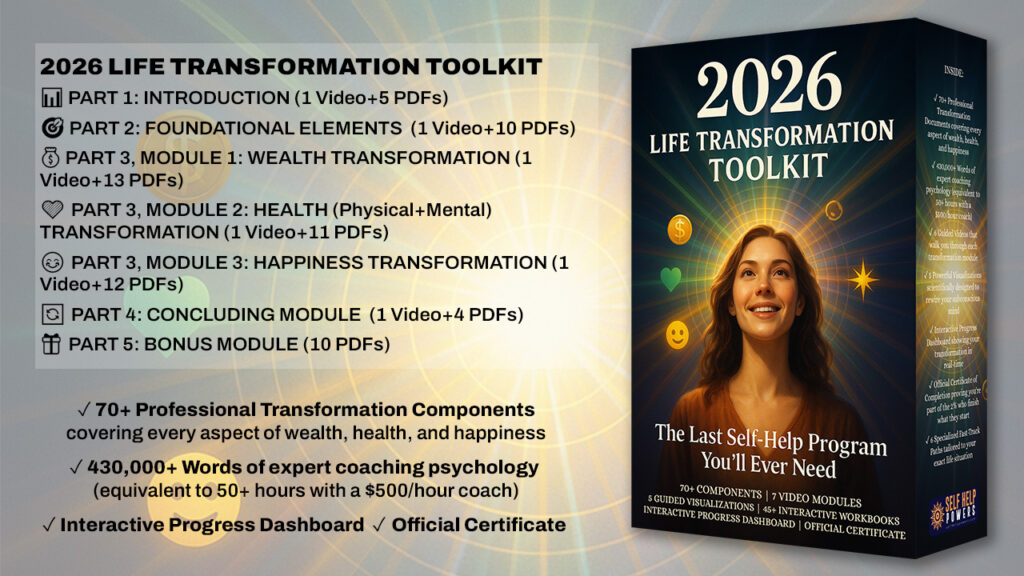
Get the 2026 Life Transformation Toolkit →
Will 2026 be a good year? Yes—if you build it that way. Start now.