2026 isn’t just another year on the calendar—it’s a threshold moment where technology, wellness, and authentic self-expression collide in ways that will reshape your daily life. If 2025 was about adaptation, 2026 is about alignment: aligning how you work with artificial intelligence, how you care for yourself with community, and how you live with what truly matters to you. So, what will 2026 look like. Let’s decode.

The Big Picture: Five Mega-Themes Defining 2026
2026 emerges as a paradox of high-tech integration paired with a hunger for genuine human connection. It’s the year when AI moves from being a tool you use to being a partner you work alongside, when wellness shifts from isolated self-care to community-based healing, and when authenticity becomes not a nice-to-have but a survival skill in a noisy world.
The personal development market is experiencing significant growth, with projections extending through 2033, driven by increasing demand for personalized learning, AI-integrated coaching, and holistic approaches to well-being. This growth reflects a fundamental shift: people aren’t just seeking self-improvement anymore; they’re seeking integration—integrating their values, their technology, their bodies, and their communities into a cohesive, meaningful life.
1. AI Becomes Your Wellness Partner (Not Your Replacement)
Here’s what 2026 looks like in practice. You wake up to an AI that’s learned your sleep patterns, suggesting the precise wake time that aligns with your natural rhythms. Throughout your day, an AI wellness coach monitors your biometrics, reminds you to hydrate, suggests a movement break when stress levels spike, and optimizes your evening wind-down routine based on tomorrow’s schedule.
This isn’t surveillance; it’s partnership. According to research from Microsoft, 2026 marks the evolution of AI from tool to true digital colleague. Rather than replacing human expertise, AI amplifies it. In the workplace, a three-person team can launch a global campaign in days because AI handles data crunching, content generation, and personalization while humans steer strategy and creativity. The future isn’t about replacing humans; it’s about enabling them to achieve more together.
However, this integration comes with responsibility. As AI agents become digital coworkers managing sensitive tasks and decisions, security becomes foundational—not added as an afterthought. Each AI should have the same safeguards protecting humans, with clear identity, limited system access, and protection from cyber threats. The currency of this augmented future is trust, and trust requires transparent, secure systems.
For your personal life, this means you’ll spend less time on routine optimization and more on what AI can’t do: creative thinking, relationship-building, and purpose-driven work.
2. The Wellness Revolution: From Solo Self-Care to Social Connection
For years, wellness meant taking time alone—a solo yoga session, a meditation app, self-care as an isolated practice. 2026 inverts that assumption.
According to wellness research, the shift toward social wellness is dramatic and measurable. People are prioritizing collective care and community well-being over isolated self-care routines. Group breathwork sessions, communal cooking classes, wellness support circles, and co-living spaces designed around well-being are proliferating. You’re no longer seeking the perfect solo retreat; you’re seeking the healing power of shared purpose.
Parallel to this shift, somatic healing practices—which involve body-based techniques for processing trauma and emotion—are moving from niche therapy to mainstream wellness. Practices like body scanning, therapeutic shaking, fascia release, and intuitive movement are helping people release stored stress and trauma locked in their nervous system. The paradigm shift is profound: trauma and stress aren’t just mental; they’re stored in your body, and true healing requires reconnecting with the wisdom of your physical self.
Additionally, wellness becomes hyper-personalized. Your health plan is no longer generic; it’s shaped by your DNA, your mood patterns, your circadian rhythms, and your microbiome. AI-powered platforms analyze your unique biology and suggest meal plans, workouts, and sleep protocols customized to your body’s specific needs. This personalization extends to hormone health, once considered taboo but now recognized as foundational to mood, energy, metabolism, and sleep quality across all genders.
Emotional fitness—the ability to regulate your nervous system, process difficult emotions, and build resilience—becomes as central as physical fitness. Neurofeedback technology allows real-time tracking of stress levels, triggering timely interventions like guided breathing or immersive soundscapes. The wellness landscape in 2026 acknowledges a truth long ignored: your emotional resilience directly impacts your physical health, and both deserve equal investment.
3. The Return to Authentic Self-Expression: Breaking the Algorithm
For over a decade, social media and algorithms trained you to optimize yourself for engagement—chasing trends, crafting the perfect image, manufacturing dopamine hits. 2026 reverses this direction.
There’s a growing recognition that constant trend-chasing and algorithms-pleasing is fundamentally draining. In 2026, people are increasingly investing their life force with intention and integrity—choosing who to spend time with, what to create, where to direct energy—based on values rather than engagement metrics. This isn’t about becoming less creative; it’s about discipline meeting creativity in powerful ways.
You’ll notice this shift in how people communicate. Authenticity becomes currency. Performance becomes exhausting. The people who thrive aren’t the ones crafting the most compelling image; they’re the ones who feel safe enough to be real—with themselves and with others.
This shift toward authenticity has workplace implications too. Leadership becomes less about projecting authority and more about creating psychological safety. Managers who foster environments where people speak up early, admit mistakes without fear, and ask questions without worrying about looking weak become the leaders teams follow. The command-and-control model doesn’t survive in 2026; it’s replaced by psychological safety as a non-negotiable leadership skill.

4. Digital Detox Goes Mainstream: Reclaiming Your Attention
Remember when digital detoxing was considered a fringe wellness practice? In 2026, it’s mainstream.
Tech-free hours and entire weekends are scheduled by ordinary people, not just wellness enthusiasts. Mindful tech use tools automatically lock distracting apps, reduce blue light emissions in the evening, and provide gentle nudges to step away from screens. Companies are responding by creating tech-life balance initiatives, offering employees options to log off after hours, introducing device-free zones in workplaces, and supporting unplugged retreats.
What makes this different from 2020’s fleeting detox trend is that it’s now integrated into wellness infrastructure. Sleep sanctuaries are designed with circadian lighting and air purification. Digital sunsets—devices that mimic natural dusk to signal melatonin production—become standard. The conversation has shifted from “you should disconnect” to “your nervous system needs disconnection to function properly.”
This represents a maturity in how we understand technology’s role. AI and digital tools amplify human capability, but constant connection degrades human capacity for deep work, genuine rest, and authentic presence.
5. Somatic Healing & Body-Based Practices: Healing From the Inside Out
One of the most significant wellness shifts in 2026 is the mainstream adoption of somatic practices—techniques that work through the body to heal the mind.
Fascia release, breathwork, and intuitive movement are no longer relegated to specialized practitioners; they’re taught in gyms, therapy offices, corporate wellness programs, and online communities. The underlying science is straightforward: when you experience stress or trauma, your body doesn’t just remember it mentally—it tenses muscles, restricts breathing, and creates holding patterns. Somatic work releases these patterns.
The most powerful applications combine somatic practice with therapy and mindfulness. A person processing trauma doesn’t just talk about it; they engage their body in releasing it. Someone managing chronic stress doesn’t just meditate; they use shaking, stretching, and breathwork to signal to their nervous system that it’s safe to relax. This integration—of nervous system recalibration, body-based healing, and psychological processing—marks a fundamental shift in how people approach wellness.
6. Community Wellness: Rediscovering “Third Spaces”
In recent years, many people worked from home, socialized online, and lost something vital: third spaces—places outside home and work where genuine connection happens.
In 2026, the appetite for these spaces resurfaces powerfully. Group wellness activities replace solo pursuits. Community gardens flourish. Neighborhood wellness walks become social rituals. Employers, schools, and cities invest in community wellness initiatives that bridge divides and foster belonging.
This isn’t nostalgia; it’s recognition of a scientific truth. Social wellness—the quality of your relationships, your sense of belonging, your contribution to community—is one of the strongest predictors of physical health and longevity. When you participate in collective care, you’re not just helping others; you’re healing yourself.
7. Learning & Leadership Transform: From Content to Capability
In the workplace, 2026 marks a fundamental shift in how organizations develop people.
For years, corporate learning meant content consumption: take the course, get the certificate, check the box. In 2026, learning teams take a central role in actual capability building and business transformation. Instead of building curricula around theoretical competency models, organizations identify real performance problems and design solutions around them.
Additionally, skill frameworks replace confusing skill taxonomies. Employees know exactly what skills their current role requires and what they need to advance. Growth paths are crystal clear. Learning becomes targeted, aligned, and purposeful.
AI plays a key role here—but not in the way many expected. Instead of replacing learning content libraries with algorithmic recommendations, AI becomes the curator that assembles raw learning materials into personalized pathways contextually tied to real business moments. An employee facing a delegation challenge doesn’t get recommended a two-day generic course; they get a simple delegation structure, coaching support, and space to practice.
Leadership development undergoes similar transformation. Coaching shifts from an advanced skill to a baseline expectation. Managers are judged not on how well they perform tasks, but on how well they develop other people to perform them. This shift is foundational: as organizations flatten and automate, managers become capability developers rather than task supervisors.
Additionally, organizations move away from annual performance reviews toward continuous performance conversations. Quick check-ins, frequent feedback, simple goals, and real-time alignment replace the dreaded year-end review. This feels more human because it mirrors how actual performance works: it’s shaped throughout the year, not judged at the end of it.
Emotionally intelligent leadership becomes survival-level critical. Teams are younger, more vocal, more diverse, and more values-driven. Leaders who can read the room, understand human behavior, motivate different personalities, and respond instead of react build psychological safety and retain talent. Emotional intelligence isn’t a soft skill; it’s leadership in its most essential form.

What This Means for Your 2026: A Practical Framework
Understanding these trends is important, but applying them to your life creates transformation. Here’s how:
Shift 1: Audit Your Relationship With Technology
Schedule regular tech-free time. Notice which apps drain you versus energize you. Set boundaries with devices—perhaps no screens one hour before bed, or tech-free dinners. Use your AI tools intelligently: let them optimize logistics so you can focus on strategy and creativity.
Shift 2: Explore Somatic and Community-Based Wellness
Try a somatic therapy session, a group breathwork class, or a community wellness initiative. Notice how your nervous system responds. The goal isn’t relaxation alone; it’s integration—feeling at home in your own body while connected to others.
Shift 3: Commit to One Meaningful Learning Goal
Rather than trying to master everything, pick one skill or capability that matters to your work and growth. Commit to 3-4 months of focused practice. Pair it with coaching or community accountability.
Shift 4: Invest in Authentic Connection
Identify a “third space” you can participate in regularly—a community group, a wellness class, a creative circle. Show up consistently. The power of these spaces lies in repetition and genuine presence.
Shift 5: Clarify What Authentic Self-Expression Looks Like for You
Spend time reflecting on what you actually care about—separate from what you think you should care about. What energizes you? What aligns with your values? Let this guide your choices about time, relationships, and work.
Key Takeaways
2026 is the year when technology serves humanity rather than the reverse. It’s the year somatic healing and community wellness become normal. It’s the year authenticity stops being a nice aspiration and becomes a practical necessity. It’s the year continuous learning replaces event-based training. It’s the year emotional intelligence becomes as valued as technical skill.
But none of these shifts happen by accident. They require intention, planning, and the right framework to guide your journey.
Transform Your 2026 With a Clear Blueprint
Understanding these trends is the first step. Actually implementing them—building new habits, navigating the transitions, staying aligned when life gets chaotic—is where most people get stuck.
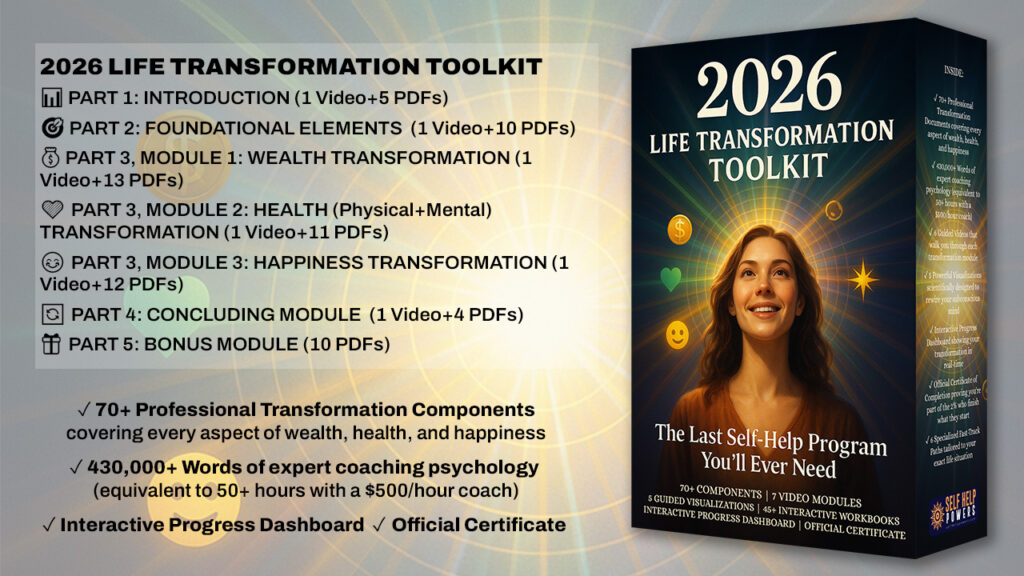
That’s exactly why we created the 2026 Life Transformation Toolkit. It walks you through every element needed to thrive in this transformed landscape:
- Trend Impact Assessment: Understand which 2026 shifts matter most to your life and work
- AI Partnership Framework: Learn how to leverage AI as a true partner while protecting your focus and creativity
- Wellness Integration Guide: Build a personalized wellness plan that includes somatic practices, community connection, and authentic self-expression
- Learning Roadmap: Design one focused learning goal that compounds throughout the year
- Monthly Alignment Checks: Stay connected to your authentic self as you navigate constant change
This toolkit combines the science of these trends with practical, implementable strategies you can use immediately.
Get the 2026 Life Transformation Toolkit →
Stop trying to figure this out alone. The future is coming whether you prepare or not. The question is: will you be reactive, adapting as changes hit you? Or will you be proactive, aligned with the shifts already reshaping how we live, learn, and connect?
2026 is waiting. Make it count.
Meta Information
Meta Title: What Will 2026 Look Like? 5 Mega-Trends Transforming Your Life
Meta Description: Discover the 5 biggest trends shaping 2026: AI partnership, wellness evolution, authentic self-expression, somatic healing, and learning transformation. Learn how to prepare and thrive in the year ahead.