2026 is shaping up to be an extraordinary year for readers. With over 300+ anticipated book releases spanning literary fiction, psychological thrillers, fantasy, historical fiction, romance, and personal development, there’s something for every reader. But beyond the sheer volume of releases, 2026 represents a turning point: readers are increasingly using books not just for escape, but as tools for personal transformation, resilience-building, and happiness.
If you’re committed to personal growth in 2026, your reading list is just as important as your vision board and goal-setting. Books reshape how you think, expand your empathy, build your resilience, and provide frameworks for living better. This guide walks you through the most essential 2026 Book Releases while helping you build a reading practice that transforms your year.
What 2026 Holds: A Record Year for Readers
The diversity of 2026’s releases is unprecedented. Major authors are returning with highly anticipated series continuations. Debut authors are bringing fresh voices and perspectives. Literary fiction is experiencing a renaissance paired with thrilling plots. Psychological thrillers are getting more psychologically complex. Fantasy is expanding in scope and ambition. And personal development books are addressing the modern challenges of burnout, disconnection, and lack of purpose.
What this means: whether you read for escape, inspiration, growth, or all three, 2026 has books waiting for you.
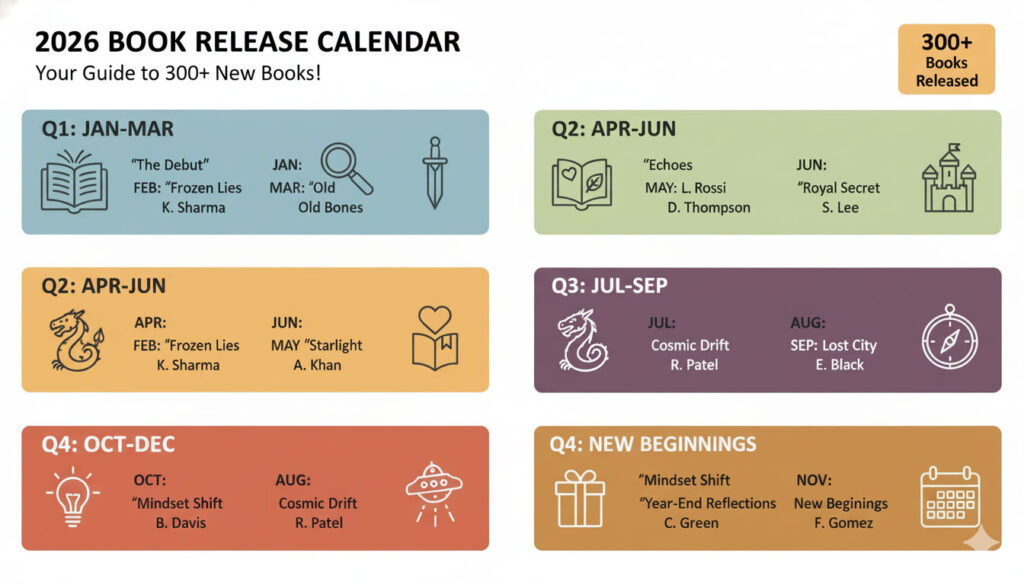
Month-by-Month: Your 2026 Reading Calendar
January: Strong Debuts and Series Launches
Start your year with compelling narratives. “Crux” by Gabriel Tallent brings psychological depth. “Meet the Newmans” by Jennifer Niven offers the character-driven storytelling that made “Lessons in Chemistry” beloved. Multiple fantasy debuts launch new worlds. January is perfect for setting your reading intentions alongside your other 2026 goals.
February-March: Thriller and Mystery Peak Season
B.A. Paris returns with “When I Kill You”—a psychological thriller that twists expectations. Mary Kubica’s “It’s Not Her” keeps the mystery torch burning. Tana French’s “The Keeper” brings literary depth to crime fiction. These months align perfectly with spring renewal energy; pair them with books that challenge your thinking.
April-June: Summer Blockbusters and Literary Releases
“The Calamity Club” by Kathryn Stockett follows her triumphant return to fiction. “The Midnight Train” by Matt Haig blends philosophical depth with compelling narrative. Lisa Jewell’s “It Could Have Been Her” and Maggi O’Farrell’s “Land” bring literary quality paired with page-turning plots. These spring and early summer months are ideal for deeper, more satisfying reads.
July-December: Fantasy Dominates and Year-End Blockbusters
Brandon Sanderson & Peter Orullian collaborate on “Songs of the Dead”—a major fantasy event. Pierce Brown’s “Red God” (Red Rising series) escalates epic conflict. T. Kingfisher’s “Wolf Worm” brings dark fantasy energy. Mark Lawrence and Tad Williams release major works. Fall and winter offer major releases and literary prize contenders. This is the season for immersive reading experiences.
Genre Deep Dives: Finding Your 2026 Reading
Literary Fiction: Stories That Stay With You
2026’s literary fiction embraces character depth, emotional nuance, and language beauty. These aren’t quick reads—they’re books you sit with, books that reshape how you see the world. Perfect for readers seeking books that expand empathy and challenge perspective.
Psychological Thrillers: The Mind as Battlefield
2026’s thrillers go deeper psychologically. B.A. Paris, Mary Kubica, and emerging authors craft narratives where character psychology is as gripping as plot twists. These books are perfect for readers wanting page-turning excitement paired with authentic character motivation. They’re also ideal for understanding human behavior and decision-making.
Fantasy & Speculative Fiction: Worlds Demand Exploration
From epic fantasy (Brandon Sanderson) to dark fantasy (T. Kingfisher) to dungeon fiction (Matt Dinniman’s Dungeon Crawler Carl universe), 2026’s fantasy landscape is expansive. Perfect for readers wanting immersion, escape, and complex world-building. Speculative fiction also builds systems-thinking and creativity.
Historical Fiction: Deep Time, Resonant Stories
Authors like Lisa See and Maggi O’Farrell write historical fiction that honors research while creating deeply human stories. Perfect for readers wanting to understand history through character experience and develop appreciation for different eras and perspectives.
Debut Authors: Fresh Voices, Emerging Perspectives
Multiple debuts across all genres bring diverse backgrounds and fresh storytelling approaches. Supporting debuts enriches the literary ecosystem. Emerging authors often bring unique perspectives that challenge established genre conventions.
The Self-Help Revolution: Personal Development Books as Transformation Tools
Beyond fiction, 2026 brings significant personal development releases focused on what readers genuinely need: purpose, connection, resilience, and meaning.
“Mattering: The Secret to a Life of Deep Connection and Purpose” by Jennifer Breheny Wallace (releasing January 2026) directly addresses the epidemic of burnout and disconnection defining modern life. Books like this aren’t aspirational fluff—they’re evidence-based frameworks for genuine transformation.
Research consistently shows that reading self-help and personal development books produces measurable outcomes:
- Enhanced Empathy & Emotional Intelligence: Reading builds your capacity to understand perspectives different from your own, making you more attuned to others’ needs and emotions
- Improved Cognitive Function: Reading strengthens memory, focus, and critical thinking—all essential for achieving your goals
- Stress Reduction & Mental Health: Reading creates calm, reduces cortisol (stress hormone), and provides psychological comfort
- Resilience Building: Stories of others overcoming challenges build your own resilience and belief in recovery
- Problem-Solving Development: Reading exposes you to diverse approaches and creative solutions, expanding your problem-solving toolkit
Reading self-help books specifically shows even stronger evidence for anxiety and depression management, particularly books using Acceptance and Commitment Therapy (ACT) or Cognitive Behavioral Therapy (CBT) frameworks.
The science is clear: if you want to grow in 2026, reading isn’t optional—it’s foundational.
Aceess the best self-help books here
Creating Your Transformational 2026 Reading Plan
Understanding what’s available is one thing. Actually building a reading practice that transforms your year is another. Here’s how:
Step 1: Define Your Reading Intentions
Before creating a list, ask yourself:
- Why do I want to read more in 2026?
- What areas of my life would reading help me improve?
- Do I want escape, growth, inspiration, or a mix?
- How many books can I realistically read?
- What genres call to me?
Writing these intentions down anchors them. Unlike vague goals (“read more”), specific intentions (“Read one self-help book per month focused on resilience and one fiction book per month for empathy-building”) give you direction.
Step 2: Build a Balanced TBR (To-Be-Read) List
Don’t create a list of 50 books. Instead, create 12 months of intentional reading:
- Month 1: One self-help book (personal growth focus) + one fiction (any genre)
- Month 2: One fiction + one memoir or biography (learning from real lives)
- Month 3: One fantasy or speculative fiction (imagination and systems thinking) + one self-help
- Repeat pattern with diversity in genres and authors
This creates rhythm: growth pairing with escape, empathy-building with inspiration. Mix established authors you love with debut discoveries.
Step 3: Create Daily Reading Rituals
Reading 30 minutes daily equals roughly 20 books per year. Reading 60 minutes daily equals roughly 40 books annually. The key is consistency, not quantity.
Suggested ritual:
- Morning: 15-20 minutes with your coffee or breakfast
- Evening: 15-20 minutes before bed (bonus: improves sleep quality)
- Weekly: One longer reading session (1-2 hours on weekend)
This small ritual compounds throughout the year into transformation.
Step 4: Integrate Reading Into Your Growth Plan
Your reading isn’t separate from your 2026 goals—it’s woven through them:
- Reading self-help books about resilience? Apply frameworks immediately through journaling or action steps.
- Reading fiction about authentic relationships? Notice relationship patterns in the story; reflect on your own relationships.
- Reading fantasy about courage? Consider where you need courage in your life.
- Reading biography of someone you admire? Study their decision-making and resilience.
This integration—reading + reflection + action—is where transformation happens.
Why Reading Matters for Your 2026 Transformation
You set goals. You create vision boards. You commit to habits. But without reading, you’re missing one of the most powerful tools for reshaping how you think.
Reading does something that podcasts and videos don’t: it forces you to slow down. It requires you to engage your imagination. It builds sustained focus in an age of constant distraction. It expands your perspective beyond your lived experience. It teaches you systems thinking, empathy, resilience, and creativity through narrative rather than lecture.
When you read a character overcoming adversity, your brain activates similar neural pathways as if you were experiencing it yourself. When you read self-help frameworks, your brain prepares to recognize and act on those patterns in your life. When you read about different perspectives, you build cognitive flexibility that helps you navigate your own challenges.
Reading isn’t escape from your goals; it’s an accelerant for them.
Your 2026 Reading Challenge
Pick one book from 2026’s releases this week. Set a reading ritual. Commit to 30 minutes daily. Reflect on what you read. Let books reshape how you think, what you believe about yourself, and what becomes possible in your life.
2026’s book releases are waiting for you. They’re not just entertainment—they’re invitations to transformation.

Build Your Complete 2026 Transformation Blueprint
Reading transforms your mind. But reading alone doesn’t guarantee life transformation. You need frameworks, practices, and accountability to convert insights into action.
That’s exactly what the Triple Crown of Success: Blueprint for Happiness provides—the actionable framework that pairs with your reading journey. While books expand your perspective and build resilience, this guide moves you from insight to action:
- Practical frameworks for translating book insights into life changes
- Monthly challenges tied to your reading themes
- Reflection prompts that deepen learning from each book
- Action plans that convert understanding into behavior change
- Community and accountability to maintain momentum
Reading books + having an action framework = genuine transformation.
Get Triple Crown of Success: Blueprint for Happiness →
This ebook provides the blueprint that transforms reading from intellectual exercise into life-changing action. Pair it with your 2026 reading plan for exponential growth.
Your reading list is ready. Your framework is waiting. Your transformation is within reach. Start today.


