She had been raised Catholic. She’d left the Church at 22. For the next decade, she described herself as “not really spiritual” — because in her mind, spirituality and religion were the same thing, and if she didn’t have one, she didn’t have the other.
Then she sat across from me in a coaching session and told me, almost apologetically, that she cried every single time she walked alone in the woods. That she felt a presence in old trees she couldn’t explain. That the ocean made her feel more at home than any building she had ever entered.
“That is your spirituality,” I told her.
She stared at me. “That doesn’t count, does it?”
It counts. It has always counted.
One of the most common and most painful misunderstandings I encounter at Self Help Powers is the belief that spirituality belongs to a specific group of people — the religious, the meditating, the incense-burning few. The truth is far more expansive, and far more personal than that. Spirituality is the deeply human search for meaning, connection, and something larger than the day-to-day noise of life. And it takes as many forms as there are human beings alive to practice it.
Pew Research Center’s landmark 2023 study — surveying over 11,000 Americans — found that 70% of U.S. adults describe themselves as spiritual in some way. And 86% believe that humans have a soul or spirit beyond the physical body. That is nearly nine out of ten people. Yet most of them have never been given a language for the specific kind of spirituality that feels most alive inside them.
That language is what this post is for.
By the end, you won’t just know the eight main types of spirituality. You’ll know which ones feel like yours — and exactly where to start.
📘 Free Resource: Want a guided self-reflection workbook to help you explore your spiritual path? Grab the free Self Help Powers ebook here — it includes reflection prompts for every spiritual type in this article.
What Is Spirituality — And Why Are There So Many Different Kinds?
Before we explore the types, let’s get clear on the thing itself.
Spirituality is not a belief system you adopt. It is not a set of rules you follow. It is a way of being in relationship — with yourself, with other people, with the natural world, and with whatever you call the something-larger that lies beneath the surface of ordinary life. Some people call that something God. Some call it the universe, consciousness, the divine, energy, or simply love. The name matters far less than the relationship.
What makes spirituality so varied is what makes humans so varied. We have different temperaments. Different wounds. Different ways of knowing. Some of us find the sacred in silence. Others find it in service. Some in study, some in movement, some in community, some in solitude. There is no single correct doorway — only the one that opens for you.
And here is something important: spirituality and religion are not the same thing. Religion is an organised system of beliefs, rituals, and community practices. Spirituality is the inner, personal experience of connection and meaning. The two can overlap beautifully — and for many people, they do. But you can be deeply spiritual without being religious, and — as many people discover — you can be religious without feeling particularly spiritual.
Gallup’s 2023 national survey found that 33% of Americans now identify as spiritual but not religious — a category that barely existed in mainstream conversation a generation ago. And Pew Research found that Americans are far more likely to say they have become more spiritual over time than to say they have become more religious. Something is shifting in how people relate to this dimension of life. They want the depth without the dogma. The connection without the institution. The meaning without someone else defining it for them.
That is exactly why knowing your spiritual type matters so much.
When you know your type, you stop wasting years on practices that were never built for your nature. You stop mistaking your restlessness with one tradition for a failure of faith. You start going deeper — faster — in the direction that already calls to you.
“I had one client,” I told a workshop audience last year, “who spent three full years trying to meditate in the traditional seated way because she thought that was what spiritual people do. She felt like a failure every single morning. The moment she discovered she was a body-based spiritual person, and started practicing through movement instead — everything opened up. Three years of struggle dissolved in three weeks.”
Your path is already yours. This article is just going to help you name it.

What Are the Main Types of Spirituality?
Here are the eight main types I work with at Self Help Powers, refined through years of coaching and the rich, varied lives of the people I’ve had the privilege of walking alongside. Each type has a description, a personal identifier — “you might be this type if…” — and a starter micro-practice you can try this week.
Read them all before deciding. Most people find themselves in two or three types simultaneously. That is completely normal, and we’ll address it later. For now, just notice where something pulls.
1. Religious or Devotional Spirituality
What Is Religious or Devotional Spirituality — And Is It Still Relevant Today?
This is the oldest, most widely practiced, and most misunderstood type of spirituality in the modern conversation. In a world where “institutional religion” often carries negative associations, many people dismiss devotional spirituality without examining what it actually offers — and what it offers is genuinely profound.
Religious or devotional spirituality centers on a relationship with a higher power — God, Allah, the Divine, Waheguru, whatever name a tradition uses — expressed through prayer, ritual, sacred text, community, and moral practice. It is not primarily about rules and restrictions. At its best, it is about love. The devoted person finds the sacred in the repeating rhythms of practice — the daily prayer, the weekly Sabbath, the annual holy season. Ritual creates a container for meaning that nothing else quite replicates.
Harvard T.H. Chan School of Public Health’s 2024 research found that spiritual community participation — most typically expressed as religious service attendance — is associated with healthier lives, including greater longevity, less depression and suicide, and less substance use. The research is not ambiguous. For many people, the structure and belonging of devotional community is genuinely life-sustaining.
“People write off religion because of bad experiences,” I often say in coaching. “But what they’re really writing off is the institution — not the experience of devotion. Those are two completely different things.”
You might be this type if: ritual, community, and a clear moral or ethical framework give you peace and grounding. If belonging to something larger than yourself through a shared tradition makes you feel held, not constrained. If prayer — whether whispered, sung, or silent — feels like the most natural form of communication you know.
Starter micro-practice: Attend one service, ceremony, or ritual this week — even if you’re returning to something you stepped away from. Approach it not from obligation but from pure curiosity: “What is still alive in this for me?”
2. Mystical Spirituality
What Is Mystical Spirituality — And What Makes Someone a Mystic?
Mystical spirituality is the path of direct experience. It is less interested in theology or doctrine and far more interested in encounter — the raw, immediate, sometimes overwhelming experience of touching something infinite.
The mystics appear in every tradition across human history. The Sufi poets. The Christian contemplatives — Teresa of Ávila, Meister Eckhart, Thomas Merton. The Zen masters. The Hindu sages. They are separated by culture and century, but united by one desire: to dissolve the distance between themselves and the sacred. Not to believe in God, but to experience the divine directly. Not to read about union, but to live it.
This type of spirituality is not restricted to any religion. A person can be a secular mystic — someone who has experienced moments of profound expansion, of ego-dissolution, of oneness with everything — without ever setting foot inside a temple. Many of my clients who identify as atheist or agnostic have described mystical experiences they don’t have words for. They are mystics who haven’t been given permission to use the word.
Research on the neuroscience of spiritual practices by Dr. Andrew Newberg at Thomas Jefferson University shows that states of mystical union — traditionally accessed through deep meditation, prayer, or contemplative practice — are associated with measurable changes in brain function: increased frontal lobe activity, reduced fear response, and a dissolution of the brain’s sense of self-boundary. The mystics were describing, in poetic language, what neuroscientists are now mapping.
You might be this type if: you have had moments — perhaps rare, perhaps brief — of feeling infinitely expanded, completely at peace, or at one with something vast. You are not satisfied with believing about the divine. You want to taste it. Intellectual explanations leave you cold. The direct experience is everything.
Starter micro-practice: Spend ten uninterrupted minutes in total silence. Not meditating with technique — simply sitting, breathing, and asking one open question into the quiet: “What is beneath all of this?” Don’t try to answer it. Just let the question open you.
3. Nature-Based Spirituality
What Is Nature-Based Spirituality — And Can the Outdoors Really Be Your Church?
Of all the types on this list, nature-based spirituality is the one that most surprises people when they recognise themselves in it. Because we have been taught, subtly and persistently, that spiritual experiences happen indoors — in churches, meditation centres, temples, and retreats. And yet some of the most powerful spiritual encounters human beings describe happen in forests, on mountains, beside rivers, and beneath open skies.
Nature-based spirituality is rooted in the oldest human spiritual instinct: the recognition that the natural world is not merely a backdrop to life but is itself alive, intelligent, and sacred. It encompasses a wide range of expressions — from ancient earth-based traditions and paganism to secular awe practices, animism, ecopsychology, and the simple, powerful act of walking into a forest and feeling something shift.
The science here is remarkable. Neuroscience research shows that experiences of awe — reliably triggered by nature — produce the same neurological states as traditional spiritual practices: increased frontal lobe activation, down-regulation of the fear-linked limbic system, and a reduction in what researchers call the “default mode network” — the mental chatter of self-referential thinking. When you stand at the edge of the ocean and feel temporarily small and completely at peace, your brain is doing something genuinely extraordinary.
This is my client from the beginning of this post. The woman who cried in the woods and thought it didn’t count. It counted. It was her most direct, most authentic, most consistent spiritual experience. Once she stopped apologising for it and started practicing it, her entire relationship with herself changed.
You might be this type if: you feel most alive, most grounded, most genuinely yourself when you are outside. If sunsets affect you deeply, if the ocean feels like home, if the company of trees is more comforting than most human company you know. If being in nature resets something in you that nothing else can reach.
Starter micro-practice: A 20-minute awe walk — no phone, no music, no destination. Walk slowly. Notice what you see, smell, hear, and feel on your skin. Let your full attention land on the world around you. At some point during the walk, stop and spend one minute simply looking at something natural — a tree, the sky, a patch of grass — with complete, unhurried attention.
4. Mindfulness and Contemplative Spirituality
What Is Mindfulness and Contemplative Spirituality — And How Is It Different from Just Meditating?
This is the path of awareness. Of waking up to what is actually happening — in your mind, in your body, in the present moment — rather than spending your life lost in thought about the past or future.
Contemplative spirituality is rooted in Buddhist and Hindu traditions but has been practiced, in various forms, in virtually every major spiritual lineage on earth. Its central insight is this: the quality of your inner life — the clarity, the peace, the freedom you are searching for — is not somewhere else. It is here, now, in this moment, when the mind is sufficiently still to receive it.
The difference between mindfulness spirituality and simply meditating is one of depth and intention. A person can meditate as a stress-management technique. A contemplative practitioner meditates as an investigation into the nature of existence — asking not just “how can I feel calmer?” but “who is it that feels? What is the nature of this awareness that observes all experience?” These are radically different questions, and they lead to radically different places.
A landmark 2024 study on frontline healthcare workers found that higher levels of spirituality were directly connected to post-traumatic growth — not merely resilience or recovery, but genuine positive transformation that emerged through struggle. Contemplative practice, in particular, cultivates the capacity to sit with difficult experience without being destroyed by it. That is a form of inner freedom that changes everything.
You might be this type if: you are drawn to silence. You find yourself observing your own thoughts with a kind of curious detachment. You want to understand the nature of your mind — not just manage it. You feel more at home in stillness than in noise. Something in you recognises that the answers you’re looking for are not outside yourself.
Starter micro-practice: A five-minute breath meditation, every morning for two weeks. Not trying to clear your mind — simply watching your breath and noticing when thoughts arise, without following them. At the end of two weeks, journal one sentence: “What have I noticed about my mind that I didn’t notice before?”
5. Humanistic or Service-Based Spirituality
What Is Humanistic or Service-Based Spirituality — And Can Helping Others Be a Spiritual Act?
For some people, the most powerful spiritual experience is not found in silence, scripture, or nature. It is found in the face of another person. In the moment when your presence genuinely helps someone else. In the act of giving something — your time, your attention, your skills, your care — without any expectation of return.
Humanistic spirituality centers on the sacred as it lives within humanity. It finds the divine not in a separate higher power but in the depth of human connection, in compassion, and in the act of contribution. People on this path feel most spiritually alive when they are in service — not as a performance of goodness, but as a genuine expression of love.
This type includes a wide range of expressions. The doctor who feels called to medicine as a vocation, not just a career. The teacher who knows that what she does in the classroom is sacred work. The social justice activist driven by a profound sense of the dignity of every human life. The parent who shows up, day after day, with full presence and unconditional love. The friend who sits with someone in their darkest hour and simply does not leave.
Viktor Frankl — psychiatrist, Holocaust survivor, and founder of logotherapy, the psychology of meaning — argued that one of the three primary pathways to meaning in life is giving something to the world. Service is not a side note to the spiritual life. For many people, it is the spiritual life.
You might be this type if: you feel most spiritually awake when you are genuinely useful to someone else. If compassion is your deepest reflex — not as a discipline but as your natural orientation. If you find that helping others fills something in you that nothing else reaches. If your purpose feels most alive when it’s in service of something beyond yourself.
Starter micro-practice: One intentional act of service this week — done in complete silence, with no mention of it to anyone, and no expectation of recognition. Let the act itself be the practice.
6. Intellectual or Wisdom-Based Spirituality
What Is Intellectual or Wisdom-Based Spirituality — And Is There a Spiritual Path for Thinkers?
There is a particular kind of person who has always found the sacred in ideas. Who has wept reading philosophy. Who stays up too late following a thread of thought about consciousness, reality, or the nature of the self — not because they have to but because something in them cannot stop. Who experiences a good question as more sacred than most answers.
This person is often told, implicitly or explicitly, that they are too much in their head to be spiritual. That they need to feel more and think less. That spirituality is about the heart, not the mind.
I profoundly disagree.
Intellectual spirituality — also called wisdom-based or Jnana spirituality — is one of the oldest and most respected paths in human history. It appears as Jnana Yoga in Hinduism, as the Kabbalah in Jewish mysticism, as the Socratic tradition in Western philosophy, and as the scholarly lineage in Buddhist, Sufi, and Christian contemplative traditions. Its practice is the pursuit of understanding: Who am I? What is consciousness? What is the nature of reality? What does it mean to live and die? These are not academic questions. They are the deepest questions a human being can ask — and pursuing them with genuine hunger is a profoundly spiritual act.
The neuroscience of deep intellectual inquiry shows that engaging with meaningful, challenging questions activates the prefrontal cortex, the brain’s seat of meaning-making, self-awareness, and executive function. Thinking deeply about your own nature is not an escape from spirituality. It is one of its most direct paths.
You might be this type if: books feel like holy objects. Deep conversations feel more nourishing than almost any other human activity. You are energised by understanding — even partial, provisional understanding. You find that the right question opens something inside you that the best answer never quite reaches. You are drawn to the mystery, not despite your intellect but through it.
Starter micro-practice: Choose one philosophical or spiritual text — a page is enough. Read it slowly. When you finish, close the book and ask yourself one question: “What does this teach me, specifically, about my own experience right now?” Let the text be a mirror, not just an object of study.
7. Body-Based Spirituality
What Is Body-Based Spirituality — And Can Movement Be a Form of Prayer?
The body is not separate from the spirit. It has never been. In every ancient wisdom tradition, the body was understood as a sacred vessel — the temple in which the spirit lives and through which it expresses itself in the world.
Body-based spirituality is the path that takes this seriously. It is spirituality accessed through physical sensation, movement, breath, and the deep intelligence of the body itself. It includes yoga, breathwork, qigong, tai chi, conscious dance, somatic practices, and any form of movement undertaken with full presence and intentionality.
This path is particularly important for people who have experienced trauma. Because trauma lives in the body — it is stored in nervous system patterns, in held tension, in the chronic disconnect between a person and their own physical experience. Spirituality that incorporates body awareness has been shown to support post-traumatic growth — the genuine positive transformation that can emerge from the deepest suffering, when the right practices create the right conditions.
Many of my clients who come to Self Help Powers carrying significant trauma have found body-based spirituality to be their most reliable and most healing path. Not because it bypasses the mind, but because it integrates what the mind alone cannot reach.
“I had one client who hadn’t felt at home in her own body in twenty years,” I shared in a workshop recently. “Three months of intentional movement practice, approached as a spiritual act rather than exercise, and she told me: ‘I moved back in.’ Those were her exact words. She moved back in.”
You might be this type if: you have had experiences of transcendence during physical movement — a run where the mind went entirely quiet, a yoga class where you felt something beyond the physical, a moment of dance where you felt profoundly, electrically alive. If the body is where you feel most at home, or if it is where you feel most estranged — both, interestingly, often point toward this path.
Starter micro-practice: A 15-minute intentional movement session — no screen, no music, no instruction. Just you and your body, moving however feels natural. Pay attention to sensation throughout. At the end, sit for two minutes and notice: “Where do I feel most open right now? Where am I still holding?”
8. Eclectic or Personal Spirituality
What Is Eclectic or Personal Spirituality — And Is It Okay to Build Your Own Path?
This type deserves its own section — because it is, quietly, the fastest-growing spiritual orientation in the modern world. And it is the one most likely to make someone feel fraudulent, as though they haven’t chosen a “real” tradition and are therefore not doing it properly.
Eclectic or personal spirituality is the practice of building your own path. Drawing from multiple traditions, practices, philosophies, and sources of meaning. Taking what resonates and leaving what doesn’t. Creating a spiritual life that is deeply, authentically, irreducibly yours.
Pew Research’s 2023 study found that 22% of U.S. adults identify as “spiritual but not religious” — and Springtide Research Institute’s 2025 survey of young people aged 13 to 25 found that 79% identify as spiritual. The majority of that younger group practices an eclectic form — drawing from Buddhism, indigenous traditions, modern psychology, nature practice, and personal experience simultaneously. This is not dilettantism. This is a generation building spiritual lives from the inside out.
The person on an eclectic path might meditate in the morning, light a candle with an intention at noon, go for a mindful walk in the afternoon, and journal a prayer before bed. They might draw from Stoic philosophy on Monday and Buddhist impermanence teaching on Thursday. They are not confused. They are integrated. Their spirituality is a living, growing, wholly personal thing — and that is not a lesser path. It is simply a different one.
“The most important thing,” I always tell my clients who are building eclectic paths, “is that the practices you choose are practices you actually do. A borrowed ritual that you practice daily beats a perfect tradition you never show up for.”
You might be this type if: no single tradition has ever felt fully like yours, but pieces of many traditions have resonated deeply. If you feel uncomfortable claiming one label, not from confusion but from an honest sense that you are more than one thing. If what matters most to you is that your spiritual life is authentic — whatever form that takes.
Starter micro-practice: Create a personal “spiritual menu.” Write down three practices that have ever made you feel connected, alive, genuinely at peace, or more fully yourself. They can be from any tradition — or no tradition at all. Do all three in one week, consecutively, and notice which one calls you back most naturally. That call is data.

Free Tool: Not sure which type resonates most? Try the free Self Help Powers Manifestation Generator to identify your spiritual strengths and build your first healing intention around them.
Can You Be More Than One Type of Spiritual Person?
Yes. Fully, unequivocally yes.
And in fact, most people are.
The eight types above are not rigid boxes. They are more like doorways — some of which you will walk through easily, some of which will take time to open, and some of which may never feel like yours. Most people have a primary type — the one that feels most natural, most immediate, most like home. And one or two secondary types — paths where they grow, stretch, and deepen over time.
Your primary type is where the practice flows easily. Secondary types are where the learning lives.
What I caution against is what I call spiritual rigidity — staying locked inside one type even when it has clearly stopped serving you. Traditions, like people, can be outgrown. What sustained you at 25 may not be what you need at 45. And that shift is not apostasy or failure. It is growth.
My own spiritual life has moved across several of these types over the years. I was raised in a devotional tradition. I passed through an intellectual phase so intense I barely left the library. I found contemplative practice in my early thirties. And now, nature-based and body-based spirituality form the bedrock of my daily practice — with echoes of all the others woven through.
“Your spiritual path is not a train on a single track,” I tell clients. “It’s more like a river. It changes course. It finds the low ground. It doesn’t stop moving.”
Why Does Finding Your Spiritual Type Actually Matter?
This question deserves a direct, honest answer.
Because without it, you waste time. You waste years, sometimes, practicing in ways that were never built for your nature — and mistaking the resulting frustration for a personal failure of faith, discipline, or worthiness. You assume the problem is you. It isn’t. The problem is the fit.
When you practice a form of spirituality that is genuinely aligned with who you are, several things happen. The practice stops feeling like effort and starts feeling like returning. Your relationship with yourself deepens naturally. The meaning you have been searching for begins to surface — not because you worked harder but because you finally stopped working against your own grain.
And the health implications are real. The Mayo Clinic’s review of over 1,200 studies on spirituality and health found that people who practice spirituality have better health outcomes across the board — including greater longevity, stronger coping skills, higher quality of life during illness, and significantly less anxiety, depression, and suicide. Harvard Medical School’s research found that patients whose spiritual needs were addressed during serious illness reported better quality of life and lower healthcare costs. These are not soft findings. Spirituality, practiced authentically, is medicine.
But the key word is authentically. A spiritual practice you do because you think you should — one that never moves you, never challenges you, never opens anything — will not produce these results. The version of spirituality that heals you is the one that is unmistakably, irreducibly yours.
That is what finding your type is really about.
So — Which Type of Spiritual Person Are You?
Re-read the eight types. Not with your analytical mind — with your gut. Notice which descriptions made you lean forward. Which ones you kept returning to. Which ones produced a small, quiet recognition: yes, that.
That recognition is your answer.
You don’t need to commit to anything today. You don’t need to announce a path or discard another. You just need to take one step — one micro-practice, one honest conversation with yourself, one week of showing up differently. Spirituality is not an arrival. It is a direction. And the only question worth asking is: am I moving in it?
At Self Help Powers, every resource we offer — every article, every tool, every course — is built around one core conviction: that your transformation is not somewhere outside of you, waiting to be found. It is already present in the things that have always made you feel most alive. Our job is simply to help you hear them more clearly.
You are already spiritual. You have always been. This article was just the beginning of remembering what that means for you.
💎 Ready to build a daily spiritual practice around your type? The Self Help Powers 30-Day Manifestation System includes a spiritual wellness track that walks you through building a practice aligned with your nature — one guided day at a time. Join thousands of people already on the inside.
5 FAQs About Types of Spirituality
What is the most common type of spirituality?
By sheer numbers, religious or devotional spirituality remains the most widely practiced type globally. But in the United States, the picture is shifting rapidly. Gallup’s 2023 survey found that 33% of Americans now identify as spiritual but not religious — making eclectic or personal spirituality one of the fastest-growing orientations, particularly among adults under 40. Mindfulness and contemplative practices have also seen extraordinary growth over the last decade, driven by the mainstream adoption of meditation.
Can I be spiritual without following any religion?
Completely and without reservation, yes. Pew Research Center’s data is clear that 22% of U.S. adults — tens of millions of people — describe themselves as spiritual but not religious. Spirituality does not require a doctrine, an institution, a sacred text, or a community. It requires only a genuine engagement with the questions of meaning, connection, and inner life. How you answer those questions — and through what practices — is entirely your own.
How do I know what type of spirituality is right for me?
Pay attention to what moves you — not what you think should move you, but what actually does. When have you felt most at peace, most genuinely alive, most connected to something larger than your ordinary self? Was it in a moment of service? In nature? In deep silence? In study? In movement? In community? That feeling is your compass. Self Help Powers recommends spending one week trying one practice from each of your top two or three resonant types before committing to any single path.
Can your spiritual type change over time?
Yes — and for most people who take their spiritual life seriously, it does. The type that sustains you through the searching years of your twenties may not be the same one that holds you through the losses of midlife, or the deep reflection of older age. Pew Research found that 41% of Americans say they have become more spiritual over time — and that evolution frequently involves a shift in the form of spiritual practice, not just its intensity. This is healthy. It is growth.
What is the difference between spirituality and religion?
Religion is an organized, communal, often institutionalized system of beliefs, rituals, moral codes, and practices. Spirituality is the inner, personal experience of meaning, connection, and transcendence. The two can overlap — many people experience their religious practice as deeply spiritual. But they can also exist independently. You can practice a religion without feeling genuinely spiritual, and you can live a richly spiritual life entirely outside organized religion. What they share is the human desire to connect with something larger than the self. What distinguishes them is how that desire is expressed and structured.
Author
-
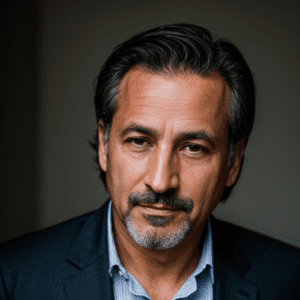 Shaun Oliver, a seasoned spiritual explorer with over 18 years of deep immersion in spiritual psychodynamics, is the visionary founder of SelfHelpPowers. Shaun's extensive journey spans the exploration of ancient Christian, Indian, Chinese, and Roman texts, fostering a rich understanding of diverse spiritual philosophies. Join Shaun Oliver on a transformative journey toward enlightenment and positive change through SelfHelpPowers.Com' curated resources and profound wisdom.