Something interesting is happening in search data this year. “Books to read on vacation” has jumped 110% in a single month, and Italy is the top destination people are searching for alongside it. People aren’t just packing sunscreen. They’re packing stories.
I don’t think that’s a coincidence, and neither does the research. Your brain doesn’t just enjoy a good beach read. It genuinely needs one. Let’s look at why, and how to pick the right book for wherever you’re headed.
Why Does Your Brain Crave Escapist Reading on Vacation?
Here’s a number that surprised even me when I first read it. A University of Sussex study found that reading fiction can lower stress levels by up to 68% in just six minutes. That’s a bigger drop than listening to music, drinking tea, or going for a walk.
Think about that. Six minutes. That’s shorter than most people spend scrolling their phone at a stoplight.
The reason is simple once you understand it. When you sink into a story, your brain gives its full attention to one thing: what happens next. That single-minded focus works almost like meditation. Your heart rate slows down. Your muscles relax. Whatever was stressing you out an hour ago quietly loses its grip, at least for a while.
I had a client, a schoolteacher, who used to feel restless the moment she sat down with a novel on the first day of summer break. She told me it felt “lazy,” like she should be doing something more useful with her time off. Once I shared this research with her, something shifted. She realized her book wasn’t a distraction from rest. It was the rest.
That’s really the heart of this whole topic. Escapist reading isn’t a break from taking care of yourself. It is taking care of yourself.
Can a Book Actually Change Your Vacation, Not Just Your Mood?
Here’s where it gets even more interesting. Books don’t just help you relax once you’re away. They shape where you decide to go in the first place.
A survey of 2,000 travelers found that one in four people had booked a trip to a destination because of a novel set there or referencing it. Nearly half said they simply wanted to see the place with their own eyes after reading about it. And once they arrived, most said the real destination lived up to the story, or beat it.
This lines up almost exactly with what’s trending in search data this year. People are searching “books to read on vacation” and “Italy” side by side, and that’s not random. A well-loved novel set in Tuscany or Rome can do more to sell a trip than any travel ad.
Reading, it turns out, doesn’t just prepare you for a vacation. Sometimes it plants the idea in the first place.
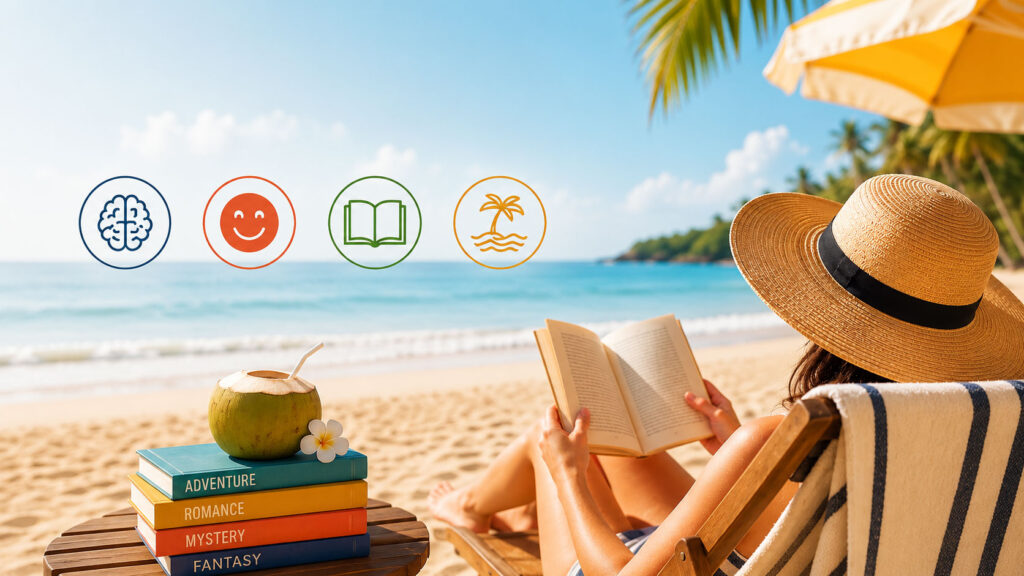
Fiction or Non-Fiction — What Actually Counts as a “Real” Beach Read This Year?
Here’s a small twist in this year’s trend data worth talking about honestly. Non-fiction is actually the top trending “beach reads” genre right now, even though most of the stress-relief research is specifically about fiction. So which is it? Do you need a novel, or will any book do?
The likely answer lies in what kind of non-fiction people mean. A memoir, a true crime story, or a well-told travel narrative reads a lot like fiction. It still pulls you into a story with characters, tension, and a pace that carries you along. That’s very different from a dense business book or a heavy strategy guide.
In fact, one travel writer’s advice on vacation reading is refreshingly blunt: “Don’t read business books on vacation.” Her argument is that keeping your “work brain” switched on defeats the whole purpose of the trip, even if the book is technically self-improvement.
At Self Help Powers, we talk a lot about growth, but growth doesn’t always look like a highlighter and a productivity book. Sometimes it looks like fully switching off for a week so you come back sharper. If your “beach read” is a narrative memoir or a gripping true story, you’re getting the same escape a novel gives you. If it’s a spreadsheet-heavy business book, you might be bringing your job with you without realizing it.
Why Do We Feel Guilty About “Guilty Pleasure” Reading?
Let’s name the real issue here, because it comes up in almost every conversation I have about vacation reading. So many people feel like they need to justify picking up something light and fun.
I’ve coached clients who bring a stack of “should read” books on every trip, books they think will make them smarter or more disciplined, and then never open a single one. Meanwhile, they finish two or three thrillers without even trying. That’s not a lack of willpower. That’s your brain telling you exactly what kind of rest it actually needs.
Fiction reading has also been linked to something beyond stress relief. A study connecting fiction to empathy found that people who read more fiction tend to score higher on tests of understanding what others are thinking and feeling. So that “guilty pleasure” romance or mystery isn’t just entertaining you. It’s quietly building a skill.
Permission to rest shouldn’t need a research citation, but if you need one, here it is. Pick the book that pulls you in, not the one you think you’re supposed to be reading.
ALSO READ: Is Immersive Reading Still Reading? What the Debate Reveals About Your Attention Span
How Should You Pick a Book for Your Specific Trip?
Not every trip calls for the same kind of book. Here’s a simple way to think about it:
- Relaxation trip (beach, resort, lake house): Go for pure escapism. Light fiction, romance, or a fast-paced mystery works well here. You want low effort, high immersion.
- Adventure trip (hiking, backpacking, road trip): Look for narrative non-fiction or fiction with a strong sense of place and momentum. Something that matches the energy of the trip itself.
- Cultural or city trip (like Italy): This is the perfect place for a novel or memoir set in that exact location. It deepens the experience of the place while you’re standing in it.
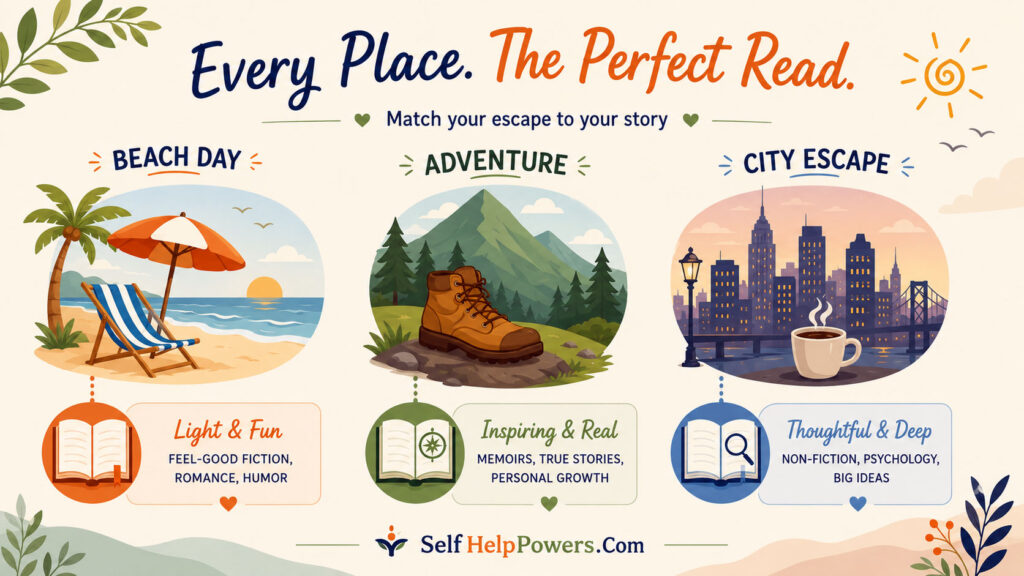
Matching the book to the trip isn’t about rules. It’s about giving your brain the kind of story it actually has room for in that moment.
What Should Be on Your Vacation Reading List This Year?
Here’s a short, mixed list to get you started, organized by the trip styles above:
- For a relaxation trip: A light, fast-moving romance or mystery novel that asks nothing of you but your attention.
- For an adventure trip: A narrative non-fiction book about exploration, survival, or discovery, one built around real momentum and stakes.
- For a cultural trip, especially somewhere like Italy: A novel or memoir set in that exact region, ideally one that captures its food, history, or daily rhythms.
- For a long flight or layover: Something episodic or short-story based, easy to pick up and put down without losing the thread.
Whatever you choose, let it be something you’re excited to open, not something you feel obligated to finish.
The Bottom Line
Your brain isn’t being lazy when it wants a beach read. It’s asking for exactly what the research says it needs: six minutes of full immersion in a story, a break from thinking about the thing that’s stressing you, and maybe even a hint of the next place you’ll want to visit.
At Self Help Powers, we believe rest is part of growth, not the opposite of it. So this year, don’t feel guilty about the book in your bag. Let it do its job. Your mind will thank you before you’ve even landed.
Frequently Asked Questions
Does reading fiction really reduce stress?
Yes. Research has found that reading fiction for just six minutes can lower stress levels significantly, more than activities like listening to music or taking a walk.
Is it okay to read “unproductive” books on vacation?
Absolutely. Light, enjoyable reading gives your brain genuine rest. Trying to read dense, work-related material on vacation can keep your “work brain” switched on.
What’s the psychological difference between fiction and non-fiction reading?
Fiction has been specifically linked to stress relief and empathy. Narrative non-fiction, like memoir or true stories, can offer similar escapism if it’s told with strong pacing and character.
How do I choose the right book for my trip?
Match the book to the type of trip. Pick light fiction for relaxation trips, narrative non-fiction for adventure trips, and location-based novels or memoirs for cultural city trips.
Can reading actually change how I experience my vacation?
Yes. Surveys show many travelers choose destinations based on books they’ve read, and often say the real place lives up to, or exceeds, what they imagined.
Author
-
 Lisa Arien is a and lead writer at Self-Help Powers, where she merges her with real-world experience to help readers achieve lasting personal growth. Known for her ability to simplify complex psychological concepts, Lisa empowers individuals to turn self-awareness into action. Her insights have been featured in , establishing her as a trusted guide in the field of self-improvement.