A Life Coach’s Guide to Turning Envy Into Growth
It’s 2 AM. You’re scrolling through Instagram again. Everyone seems to have it better than you. Your friend just got promoted. Your cousin’s posting vacation photos from Bali. Your ex looks happier than ever. And you? You’re lying in bed, feeling like a failure, drowning in jealousy.
I’ve been there. And as a life coach, I’ve sat with hundreds of clients who’ve felt exactly the same way.
Here’s something that might surprise you: You’re not alone in this struggle. A recent survey of over 2,000 Americans found that jealousy is a widespread emotion impacting people across the nation. It’s not just you. It’s all of us.
But here’s the good news. Jealousy doesn’t have to control your life. In fact, when you learn how to work with it instead of against it, jealousy can become one of your greatest teachers.
I’m Lisa Arien, and I’ve spent my career as a life coach helping people transform their jealousy into personal growth. Today, I’m going to share everything I’ve learned—both from my own journey and from working with amazing people at Self Help Powers—about how to stop being jealous and start living with more peace and confidence.

Why Do We Feel Jealous in the First Place?
Let me tell you about Sarah. She came to me completely broken. “I can’t stop comparing myself to my sister,” she told me through tears. “She’s prettier, smarter, more successful. I hate feeling this way, but I can’t help it.”
Sarah’s story is so common it breaks my heart every time I hear it.
The truth is, jealousy is wired into our brains. From an evolutionary perspective, our ancestors who paid attention to social threats survived better than those who didn’t. Research shows that jealousy plays a complementary role to love, serving to preserve romantic bonds. It’s actually meant to protect us.
But here’s where it gets interesting. Studies have found that jealousy is about 29% genetic, with the rest coming from our environment and experiences. That means most of your jealousy—about 71%—is actually something you can change.
There are different types of jealousy, too:
- Romantic jealousy — when you worry about losing your partner
- Social comparison — when you measure yourself against friends or strangers
- Professional envy — when someone else’s career success makes you feel inadequate
In my coaching practice at Self Help Powers, I’ve noticed that most people struggle with all three at different times. And that’s completely normal.
When I was working with Sarah, we discovered that her jealousy toward her sister wasn’t really about her sister at all. It was about feeling invisible in her own family. Once Sarah understood this, everything changed. She stopped trying to compete and started focusing on what made her unique.
Is Jealousy Really That Bad for You?
Here’s something my clients find shocking: Jealousy isn’t always bad.
I know, I know. That sounds crazy. But stay with me.
Think of jealousy as a smoke alarm. When smoke fills your kitchen, the alarm goes off to warn you. It’s not trying to ruin your day—it’s trying to save your life.
Jealousy works the same way. It’s pointing to something you want but don’t have yet.
Research exploring jealousy found people are generally more likely to feel jealous right before something happens, rather than after. In other words, jealousy peaks before events and fades over time. It’s temporary, not permanent.
Let me share a story from my own life. Years ago, I felt intense jealousy toward a fellow life coach who seemed to have everything I wanted—a thriving practice, a book deal, media appearances. I was so consumed by envy that I almost quit coaching entirely.
Then one day, I asked myself: “What is this jealousy trying to tell me?”
The answer hit me like lightning. I didn’t actually want her life. I wanted to feel like my work mattered. I wanted to help more people. That realization changed everything. Within six months, I’d created a new program that helped twice as many clients. My jealousy had shown me what I truly wanted.
That’s the power of treating jealousy as a teacher instead of an enemy.
What Does Your Jealousy Say About Your Self-Esteem?
Research shows consistent traits of jealous people include low self-esteem, scarcity mindset, emotional instability, and anxious attachment style.
I’ll never forget the moment I realized my own jealousy was rooted in how little I valued myself.
I’d just gone through a divorce. My ex-husband had moved on quickly, and I found myself stalking his new girlfriend’s social media. She was younger, prettier, more successful. The comparison was killing me.
One night, after another painful scrolling session, I looked at myself in the mirror and asked: “When did I stop believing I was enough?”
That question broke something open in me. I realized I’d spent years measuring my worth by external things—my relationship status, my income, how I looked. No wonder I felt jealous. I didn’t think I had anything valuable to offer.
The connection between self-worth and jealousy is huge. When you don’t believe you’re enough, you’ll constantly look around to confirm that belief. You’ll find evidence everywhere that other people are better than you.
But here’s the beautiful truth: You can rebuild your self-esteem. It takes work, but it’s possible.
At Self Help Powers, we teach people practical strategies for building genuine confidence. It starts with understanding that your worth isn’t determined by how you compare to others. Your worth is inherent. You have it simply because you exist.
Studies show that anxious attachment and closeness are significant predictors of jealousy, explaining nearly 30% of its variance. If you grew up feeling insecure in relationships, jealousy might feel extra intense for you. Understanding this can help you be more compassionate with yourself.
ALSO READ: 21 Self Esteem Activities That Can Change Your Life Forever
How Can You Stop Comparing Yourself to Others on Social Media?
A 2024 study found that 40% of respondents report that likes and comments on social media significantly affect their self-esteem. And it’s even worse for younger people. The same study reveals that 45% of people aged 15 to 29 feel intense social media use negatively impacts their mental health.
Social media is designed to trigger comparison. It’s literally built that way. Every post you see is someone’s highlight reel—the best moments of their best days.
One of my clients, Marcus, was so addicted to checking his ex-girlfriend’s Instagram that he couldn’t sleep. He’d lie awake scrolling, torturing himself with pictures of her looking happy without him.
“What if you took a break from Instagram for just one week?” I suggested.
Marcus looked at me like I’d asked him to cut off his arm. But he agreed to try.
That one week turned into 30 days. By the end of the month, Marcus told me: “I forgot what peace felt like. I didn’t realize how much anxiety social media was causing until I stepped away.”
Here’s my challenge for you: The 7-Day Social Media Detox
- Day 1-2: Delete social media apps from your phone (not your accounts, just the apps)
- Day 3-4: Notice when you reach for your phone out of habit
- Day 5-6: Write down how you’re feeling without the constant comparison
- Day 7: Reflect on whether you want to go back
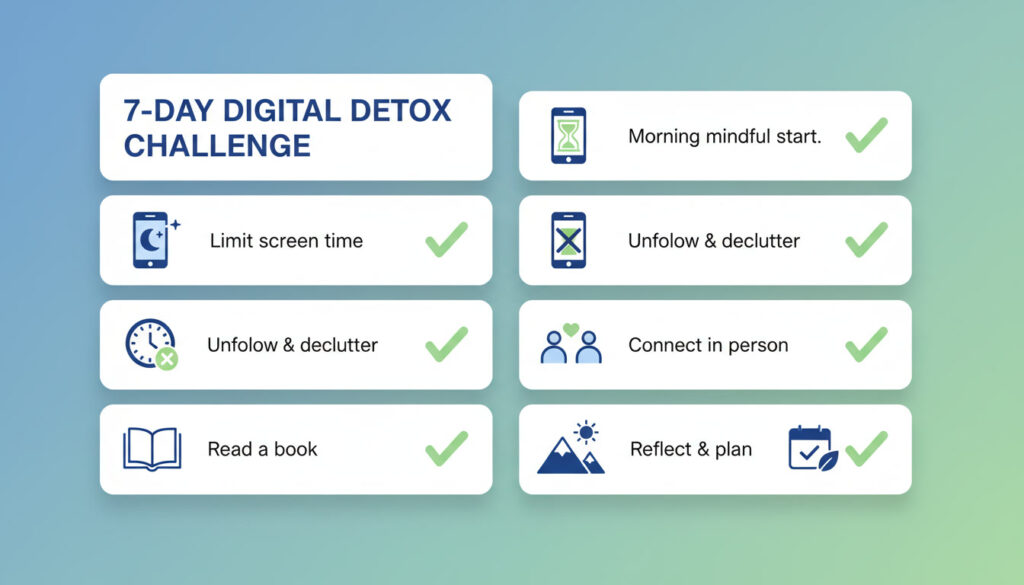
You don’t have to quit forever. But taking a break can show you how much power these apps have over your emotions.
If a full detox feels too hard, try these boundaries instead:
- Set a 15-minute daily limit for social media
- Unfollow anyone who makes you feel bad about yourself
- Turn off all notifications
- Use the “mute” feature liberally
- Post less and observe more
The resources at Self Help Powers include tools for digital wellness that can support your journey away from comparison culture.
What’s the Fastest Way to Quiet Jealous Thoughts?
When jealous thoughts hit, they can feel overwhelming. Your brain spirals. You can’t focus. You feel like you’re drowning.
I teach my clients a technique called The Boredom Method, adapted from psychologist Robert Leahy’s work in “The Jealousy Cure.”
Here’s how it works:
When a jealous thought appears—like “My coworker is so much better at presentations than me”—instead of fighting it or trying to push it away, you’re going to do something counterintuitive. You’re going to repeat it. Over and over and over.
Say the thought out loud 50 times. Write it 100 times. Seriously.
What happens? The thought loses its power. It becomes boring. Your brain realizes it’s just a thought, not a fact.
I had a client named Jennifer who was convinced her husband was having an emotional affair with a woman at his office. The thought “He likes her more than me” consumed her.
I asked Jennifer to write that sentence 200 times in a journal.
At first, she cried. By sentence 50, she felt angry. By sentence 100, she felt tired. By sentence 200, she said: “This is ridiculous. I don’t even know if this is true.”
That’s when the healing started.
Other quick techniques to quiet jealous thoughts:
The 5-5-5 Breathing Method
- Breathe in for 5 seconds
- Hold for 5 seconds
- Breathe out for 5 seconds
- Repeat 5 times
The Reality Check Questions
- Is this thought based on facts or feelings?
- What evidence do I actually have?
- What would I tell a friend thinking this?
- Will this matter in five years?
The Jealousy Journal Exercise (This is a tool I give all my clients at Self Help Powers)
Each time you feel jealous, write down:
- What triggered the feeling?
- What story am I telling myself?
- What do I actually want?
- What’s one small action I can take?
Over time, you’ll start seeing patterns. You’ll realize your jealousy isn’t random—it’s pointing to specific unmet needs.
Can Gratitude Really Help You Stop Being Jealous?
This might sound too simple to work. But the science is clear: Gratitude is one of the most powerful tools for combating jealousy.
Research shows that practicing gratitude for 15 minutes a day, five days a week, for at least six weeks can enhance mental wellness and possibly promote a lasting change in perspective.
UCLA researchers discovered that feelings of thankfulness may reduce inflammation and improve overall health by turning down brain activity associated with the biological stress response. Think about that. Gratitude doesn’t just make you feel better emotionally—it actually changes your body at a cellular level.
One analysis demonstrated that people who underwent gratitude interventions had greater feelings of gratitude, greater satisfaction with life, better mental health, and fewer symptoms of anxiety and depression.
But here’s the thing: Gratitude has to be genuine. You can’t fake it.
When I was struggling with jealousy after my divorce, people kept telling me to “just be grateful.” It made me want to scream. How could I be grateful when my entire life had fallen apart?
Then I learned the difference between toxic positivity and real gratitude.
Toxic positivity says: “Just think positive! Everything happens for a reason!”
Real gratitude says: “This is hard. AND there are still things I can appreciate.”
My Personal Gratitude Practice (The one that saved me from bitterness)
Every night before bed, I write down three things:
- One person who showed up for me today
- One thing my body did well today
- One small moment that made me smile
Some nights, my list is simple: “My friend texted to check on me. My legs carried me on a walk. The sunset was pretty.”
That’s enough.
According to UCLA Health, taking a moment to be thankful causes physiological changes in your body that initiate the parasympathetic nervous system—the part of your nervous system that helps you rest and digest.
Try this: The 30-Day Gratitude Challenge
- Week 1: Write three things you’re grateful for before bed
- Week 2: Tell one person each day why you appreciate them
- Week 3: Take photos of things that bring you joy
- Week 4: Share your gratitude practice with someone else
You can find more gratitude resources and tools at Self Help Powers to support your practice.
ALSO READ: How To Change Self Concept
How Do You Build Self-Confidence to Beat Jealousy?
Confidence isn’t something you’re born with. It’s something you build, brick by brick.
When Sarah (remember her from earlier?) started working with me, she couldn’t name a single strength she had. “I’m not good at anything,” she insisted.
So I gave her an assignment: Start a Self-Esteem File.
Here’s how it works:
Create a folder—physical or digital—where you save every piece of evidence that you’re capable and valuable:
- Compliments people give you
- Thank-you notes
- Work accomplishments
- Photos of things you’re proud of
- Screenshots of kind messages
- Certificates or awards
- Anything that proves you matter
Sarah was skeptical. But she started collecting evidence.
Six months later, her file had over 100 items. When jealousy hit, she’d open it and remind herself of her worth. The jealousy didn’t disappear completely, but it lost its grip on her.
Daily Confidence Builders:
Morning Power Question: “What’s one thing I’m good at?”
Evening Reflection: “What did I do today that I’m proud of?”
Weekly Win List: Write down three wins from the week (they can be tiny!)
Monthly Skills Inventory: Identify one new skill you’ve improved
The community at Self Help Powers celebrates these small wins together. When you share your progress with others, it becomes more real.
Remember: Building confidence isn’t about becoming perfect. It’s about recognizing that you’re already enough, exactly as you are.

When Should You Seek Professional Help for Jealousy?
Sometimes jealousy crosses a line from normal to concerning.
Here are the red flags that it’s time to talk to a therapist:
- Obsessive thoughts you can’t control (thinking about it for hours every day)
- Checking behaviors like constantly monitoring your partner’s phone or social media
- Physical symptoms like panic attacks, insomnia, or racing heart
- Relationship damage caused by constant accusations or conflicts
- Isolation from friends because you can’t handle their success
- Aggressive impulses or thoughts of harming yourself or others
I’ve had clients who needed more support than coaching could provide. And that’s okay. Therapy isn’t a sign of weakness—it’s a sign of wisdom.
A good therapist can help you work through:
- Childhood attachment wounds
- Trauma that fuels jealousy
- Anxiety disorders
- Relationship patterns
If you’re experiencing intense jealousy that’s affecting your daily life, please reach out to a mental health professional. The resources section at Self Help Powers has information on finding the right therapist for you.
Sometimes the bravest thing you can do is ask for help.
Your Jealousy Doesn’t Define You
Here’s what I want you to remember: Feeling jealous doesn’t make you a bad person. It makes you human.
Every single person on this planet has felt jealousy. What separates people who stay stuck from people who grow is what they do with that feeling.
You can let jealousy consume you, or you can let it teach you.
You can use it as evidence that you’re not enough, or as a compass pointing toward what you truly want.
You can hide from it, or you can get curious about it.
The choice is yours.
I’ve seen people transform their lives by changing their relationship with jealousy. I’ve watched clients go from bitter and stuck to confident and free. I’ve experienced it myself.
It won’t happen overnight. Some days will be harder than others. You’ll have setbacks. You’ll fall back into comparison. That’s part of the journey.
But every time you choose self-compassion over self-criticism, you’re healing. Every time you practice gratitude over envy, you’re growing. Every time you celebrate someone else’s win instead of resenting it, you’re becoming freer.
Your Action Step for Today:
Don’t try to do everything at once. Just pick one practice from this article and commit to it for the next week:
- Take a social media break
- Start a gratitude journal
- Begin your Self-Esteem File
- Practice the Boredom Technique
- Ask yourself: “What is my jealousy trying to teach me?”
That’s it. Just one small step.
At Self Help Powers, we believe in the power of small, consistent actions. We’ve seen thousands of people transform their lives not through massive overnight changes, but through tiny daily choices.
You have everything you need within you to overcome jealousy. The tools are here. The support is available. The only question is: Are you ready to start?
Your future self—the one who looks at others with genuine joy instead of envy, who feels secure in their own worth, who celebrates other people’s success without feeling diminished—is waiting for you.
Take the first step today. Check “SELF-IMAGE TRANSFORMATION: Ignite Your Self-Esteem, Rewire Confidence, and Claim Your Life“. It can really help you.

FAQs
What causes jealousy in a relationship?
Jealousy in relationships typically stems from low self-esteem, past betrayals, and anxious attachment styles. According to research, anxious attachment and emotional closeness are significant predictors of jealousy. Fear of losing your partner, unclear boundaries, lack of communication, or unresolved childhood insecurity can all trigger jealous feelings. Sometimes it’s your own insecurities being projected onto your partner rather than anything they’re actually doing.
Is it normal to feel jealous sometimes?
Yes, absolutely. Jealousy is a completely normal human emotion that everyone experiences. It’s actually biological—part of our evolutionary survival instincts. The key isn’t to eliminate jealousy entirely but to manage it in healthy ways. Occasional jealousy is normal. Constant, obsessive jealousy that damages your relationships or mental health is a sign you need support from a therapist or coach.
How long does jealousy last?
Research shows jealousy typically peaks before anticipated events and fades afterward. The good news is that time is on your side—studies at the University of Chicago found that people are more envious of future events than past ones. With consistent practice of healthy coping strategies like gratitude, self-compassion, and mindfulness, you can significantly reduce jealousy within 6-12 weeks. Some people see improvement even sooner.
Can jealousy ruin a relationship?
Yes, unchecked jealousy can definitely damage trust and create serious conflict in relationships. When jealousy becomes obsessive, it leads to controlling behaviors, constant suspicion, and emotional distance. However, when you address it through honest communication, therapy, and personal growth work, you can prevent jealousy from destroying your relationship. Mild jealousy that’s expressed healthily can actually strengthen relationships by showing you care.
What’s the difference between jealousy and envy?
Jealousy is the fear of losing something you already have—like worrying your partner might be interested in someone else. Envy is wanting something someone else has—like wishing you had their career success or possessions. An easy way to remember: jealousy involves three people (you, your partner, and a perceived threat), while envy involves two people (you and the person you’re envious of). Both emotions point to underlying needs and insecurities worth exploring.
How do I stop being jealous of my partner’s ex?
This is called retroactive jealousy, and it’s incredibly common. Start by remembering that your partner chose YOU—they’re with you now, not their ex. Their past relationships ended for a reason. To manage this, stop social media stalking the ex, focus on building new memories with your partner, and work on your own self-esteem. If you’re constantly asking your partner questions about their ex, that’s fueling the jealousy. Accept that everyone has a past and it doesn’t diminish your present.
Why am I jealous of my partner’s friends?
Feeling jealous of your partner’s friendships often signals that you feel insecure about your place in their life or that you’re not getting enough quality time together. It might also mean you’re feeling lonely or lacking your own friendships. Instead of trying to control who your partner spends time with, communicate your needs: “I’d love more one-on-one time with you.” Also, invest in your own friendships and hobbies so you’re not depending entirely on your partner for connection.
How do I stop comparing myself to others on social media?
Remember that social media shows highlight reels, not real life. A 2024 study found that 40% of people report that social media significantly affects their self-esteem. The most effective solution is taking a break—try a 7-day detox from social media. If that feels too hard, unfollow accounts that trigger comparison, set daily time limits, and follow accounts that inspire you rather than make you feel inadequate. Your real life will always be richer than anyone’s curated online presence.
Is jealousy a sign of love or insecurity?
Jealousy is primarily a sign of insecurity, not love. While some mild jealousy can show you care about keeping your relationship, intense jealousy is about your own fears and low self-worth being projected onto your partner. Real love is built on trust, security, and wanting your partner to be happy—even when that includes other relationships and activities. If you’re confusing possessiveness with love, it’s time to work on your self-esteem.
Can you be jealous of someone’s success without being a bad person?
Absolutely yes. Feeling jealous of someone’s achievements doesn’t make you a bad person—it makes you human. The difference is in what you do with that feeling. Do you let it motivate you to pursue your own goals? Or do you let it turn into resentment and bitterness? Professional jealousy is extremely common, especially in competitive fields. Acknowledge the feeling, figure out what it’s teaching you about what you want, and then take action toward your own goals.
Why do I get jealous even when I trust my partner?
This happens because jealousy isn’t really about your partner—it’s about you. You might have anxious attachment from childhood, low self-esteem, or past experiences of betrayal that have nothing to do with your current partner. Research shows that people with anxious attachment styles are more prone to jealousy even in secure relationships. The solution is to work on yourself through therapy, self-compassion practices, and building genuine confidence independent of your relationship.
How can I tell if my jealousy is normal or obsessive?
Normal jealousy is occasional, manageable, and doesn’t control your behavior. Obsessive jealousy involves intrusive thoughts you can’t stop, checking your partner’s phone or social media constantly, making accusations without evidence, isolating your partner from friends, or feeling anxious and suspicious most of the time. If jealousy is affecting your sleep, work, or causing constant conflict in your relationship, it’s crossed into unhealthy territory and you should talk to a therapist.
What is retroactive jealousy and how do I overcome it?
Retroactive jealousy (also called Rebecca Syndrome) is obsessive jealousy about your partner’s past romantic or sexual experiences. It’s intensified by social media because you can easily find photos and information about their exes. To overcome it, stop asking questions about their past, remind yourself that their ex is an ex for a reason, limit social media stalking, and focus on creating new positive experiences together. If it’s severe, cognitive behavioral therapy (CBT) can be very effective.
Why am I more jealous than my friends?
Jealousy has both genetic and environmental components. Studies show jealousy is about 29% heritable, meaning some people are naturally more prone to it. The rest comes from your life experiences—your attachment style, past betrayals, family dynamics, and self-esteem. If you grew up in an environment where love felt conditional or unreliable, you’re more likely to experience jealousy as an adult. Understanding this can help you be more compassionate with yourself while you work on it.
Author
-
 Lisa Arien is a and lead writer at Self-Help Powers, where she merges her with real-world experience to help readers achieve lasting personal growth. Known for her ability to simplify complex psychological concepts, Lisa empowers individuals to turn self-awareness into action. Her insights have been featured in , establishing her as a trusted guide in the field of self-improvement.


